Is Data Science a Good Career in 2026? Reality Check
Yes, data science is a highly rewarding and lucrative career in 2026 for those possessing rigorous analytical and programming skills. While entry-level roles face saturation, specialized demand for professionals who can deploy machine learning models and handle complex data infrastructure remains exceptionally high.
The Current State of Data Science: Market Saturation vs. True Demand
When evaluating whether is data science a good career, it is imperative to analyze the current macroeconomic landscape and the technological shifts reshaping the industry. The narrative surrounding data science has evolved significantly from the early 2010s, transitioning from a broad, loosely defined discipline into a highly specialized, engineering-centric domain. In the past, basic proficiency in Python and an understanding of logistic regression were often sufficient to secure an entry-level position. Today, the maturation of the field has led to a bifurcation in the job market: an oversaturation of candidates possessing only surface-level knowledge, juxtaposed against a critical shortage of highly technical professionals capable of designing resilient, scalable machine learning architectures. Understanding this dichotomy is the first step in mapping a successful career trajectory in data science.
The Perception of Oversaturation
The proliferation of online bootcamps, automated machine learning (AutoML) tools, and short-term certificate programs has flooded the market with entry-level candidates. This influx has created a localized saturation at the junior level. Many of these candidates possess a superficial understanding of APIs like Scikit-Learn or Pandas but lack the fundamental mathematical rigor, statistical understanding, and software engineering principles required to debug complex models or deploy them into production. Consequently, for those asking if data science is an oversaturated field, the answer is nuanced: it is oversaturated with entry-level enthusiasts, but not with competent, end-to-end practitioners.
The Reality: High Demand for Specialized Expertise
Conversely, the demand for senior data scientists and specialists remains intensely robust. Organizations are aggressively seeking professionals who possess deep expertise in areas such as Large Language Models (LLMs), Natural Language Processing (NLP), computer vision, and predictive analytics. More importantly, the modern data scientist must understand deployment environments, latency constraints, and algorithmic complexity. Companies do not just need models built in isolated Jupyter Notebooks; they require robust machine learning pipelines that can handle real-time inference, manage model drift, and scale dynamically. For individuals willing to master these advanced technical competencies, data science remains a highly resilient and lucrative career path.
What Does a Data Scientist Do in Modern Tech Stacks?
The day-to-day responsibilities of a data scientist have transformed significantly over the past decade. Previously, the role was heavily focused on exploratory data analysis (EDA) and static predictive modeling. While these elements remain foundational, modern data scientists are now deeply integrated into the software engineering lifecycle. They are expected to write production-grade code, understand containerization, and collaborate closely with data engineers and DevOps teams. This integration ensures that analytical models are not merely theoretical exercises but functional software components that drive automated business decisions, enhance user experiences, and optimize backend operations.
Evolving Roles: Beyond Jupyter Notebooks
While interactive environments like Jupyter remain standard for rapid prototyping and EDA, the modern data science workflow extends far beyond them. Today’s practitioners are responsible for translating prototyped algorithms into modular, object-oriented code. This involves writing extensive unit tests, utilizing version control systems (like Git), and ensuring code efficiency through algorithmic optimization. A modern data scientist must understand time and space complexity (Big O notation) to ensure that their models do not introduce massive latency bottlenecks when deployed into microservices architectures.
The Intersection of Data Science, Machine Learning, and Data Engineering
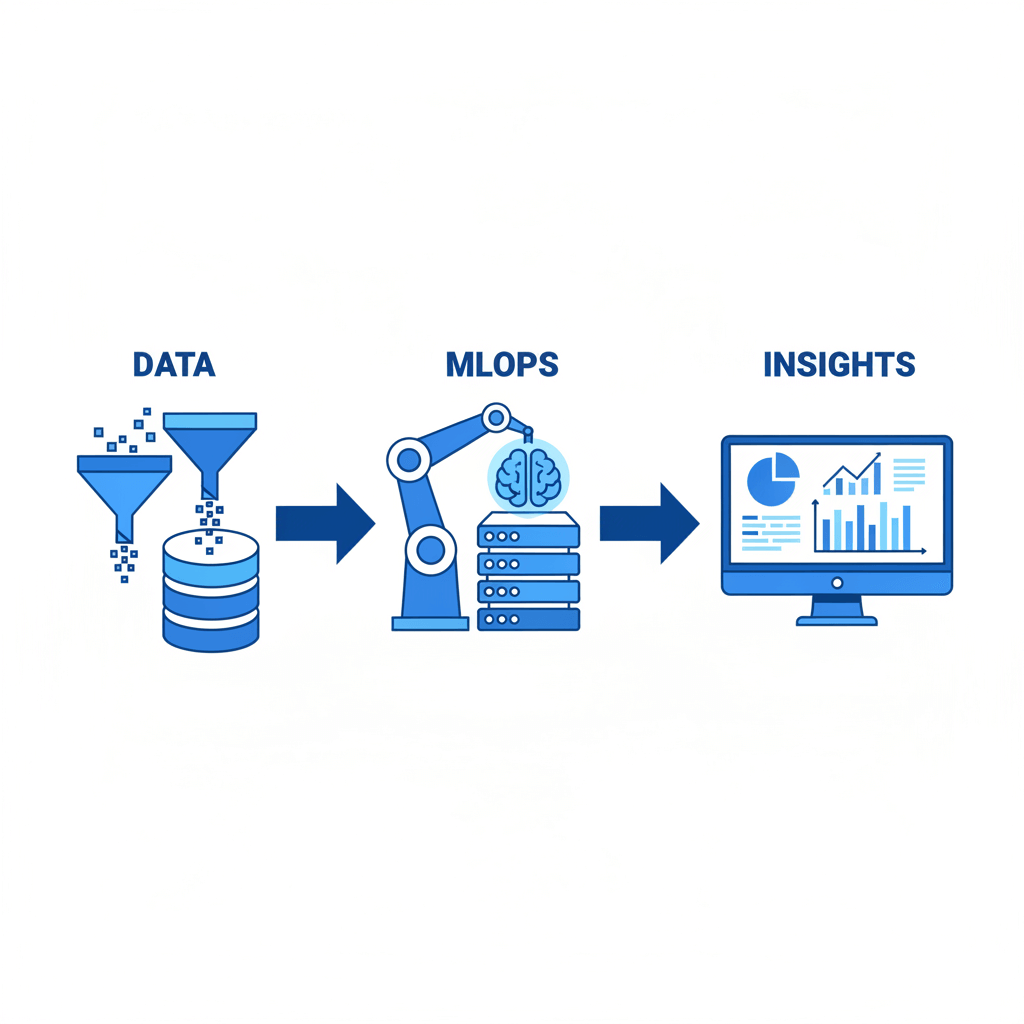
The boundary between data science, machine learning engineering, and data engineering has grown increasingly porous. A data scientist must now possess a strong working knowledge of data pipelines. While a data engineer is primarily responsible for building the Extract, Transform, Load (ETL) infrastructure, a data scientist must know how to query massive distributed databases efficiently—often requiring advanced proficiency in SQL optimization, Apache Spark, or distributed computing frameworks. Furthermore, the rise of MLOps (Machine Learning Operations) dictates that data scientists must understand CI/CD (Continuous Integration/Continuous Deployment) pipelines tailored for machine learning models, ensuring automated retraining when data distributions shift.
Pros and Cons of a Data Science Career
Before committing to this rigorous field, it is crucial to objectively weigh the advantages and challenges. A career in data science offers unparalleled opportunities for intellectual stimulation and financial reward, but it also demands perpetual learning and a high tolerance for technical ambiguity.
The Advantages of the Field
- Attractive Salary Packages: Data science consistently ranks among the highest-paying technical roles. The specialized combination of advanced mathematics and software engineering commands a premium in the labor market.
- High Impact on Business Strategy: Unlike many software engineering roles that may focus on isolated UI/UX features, data scientists often solve core business problems—such as churn prediction, dynamic pricing, and algorithmic trading—directly impacting the company’s bottom line.
- Intellectual Engagement: The role inherently involves solving novel, complex problems. The constant evolution of algorithms, particularly in deep learning and generative AI, ensures that the work rarely becomes monotonous.
- Cross-Industry Applicability: Data science skills are fundamentally agnostic to the industry. A skilled practitioner can seamlessly transition between finance, healthcare, autonomous vehicles, e-commerce, and cybersecurity.
The Inherent Challenges
- Steep and Continuous Learning Curve: The rapid pace of innovation means tools and frameworks become obsolete quickly. A data scientist must continuously read academic papers and adapt to new architectures (e.g., the shift from RNNs to Transformers).
- Data Quality Realities: In academia, datasets are clean and structured. In reality, data scientists spend a disproportionate amount of time handling missing values, resolving unstructured data formats, and debugging silent pipeline failures.
- Balancing Tech Skills and Business Knowledge: It is not enough to build a mathematically perfect model; the model must solve a defined business problem. Translating technical metrics (like F1 score or AUC-ROC) into business metrics (ROI, conversion rate) is a common friction point.
Essential Competencies and Skills Required in 2026
To definitively answer the question, “Is data science a good career?”, one must evaluate their willingness to master a multidisciplinary skill set. The barrier to entry for top-tier roles requires a synthesis of theoretical mathematics, applied statistics, and rigorous computer science principles. The modern practitioner cannot afford to treat machine learning frameworks as “black boxes.” They must understand the underlying mechanics—how gradients are calculated, how matrices are multiplied, and how memory is allocated during model training.
Core Technical Competencies (Math, Stats, and Programming)
The foundation of any data science career is built on three pillars:
- Mathematics and Statistics: A deep understanding of linear algebra (vectors, matrices, eigenvalues) is essential for grasping how data is represented in algorithms. Calculus (particularly partial derivatives and the chain rule) is the engine behind gradient descent and neural network backpropagation. Furthermore, probability theory and inferential statistics are non-negotiable for A/B testing, causal inference, and understanding model uncertainty.
- Programming Languages: Python remains the undisputed lingua franca of data science, but mastery requires more than writing basic scripts. It requires understanding Python’s memory management, the Global Interpreter Lock (GIL), and asynchronous programming. C++ is increasingly valuable for optimizing the execution speed of deep learning models, while R remains relevant in highly specialized statistical research.
- Database Management: Advanced SQL is mandatory. A senior data scientist must know how to write complex window functions, optimize query execution plans, and structure relational databases. Familiarity with NoSQL databases (MongoDB, Cassandra) and vector databases (Pinecone, Milvus) is also essential for handling unstructured data and LLM embeddings.
Tooling, Infrastructure, and MLOps
Building a model is only 20% of the lifecycle; the remaining 80% is infrastructure.
- Frameworks: Deep expertise in frameworks like PyTorch, TensorFlow, and Scikit-Learn is expected. However, knowing how to implement custom loss functions and optimize distributed training across multiple GPUs sets top-tier candidates apart.
- Cloud Computing: Proficiency in AWS (SageMaker, EC2, S3), Google Cloud Platform (Vertex AI, BigQuery), or Microsoft Azure is critical. Modern data sets are too large for local computation, necessitating cloud-native architectures.
- Containerization and Orchestration: Models must be packaged to run consistently across environments. Docker is used for creating lightweight containers, and Kubernetes is employed to orchestrate and scale these containers based on real-time traffic demands.
Alternative Career Paths to Consider
Because the broader data ecosystem is highly fragmented, individuals often realize their strengths align better with adjacent roles. Understanding these distinctions is vital for charting a successful career path. The table below outlines the primary differences between the three most prominent data-focused engineering roles.
| Role | Primary Focus | Core Tech Stack & Skills | Ideal Profile |
|---|---|---|---|
| Data Scientist | Statistical modeling, predictive analytics, hypothesis testing, and solving complex business problems using data. | Python, R, SQL, PyTorch, Scikit-Learn, Pandas, Statistical Inference, Jupyter. | Individuals with a strong mathematical background who enjoy finding patterns and translating data into strategic business insights. |
| Data Engineer | Building and maintaining robust data pipelines, data warehousing, and ensuring data quality and availability. | Apache Spark, Kafka, Airflow, Hadoop, Snowflake, dbt, advanced SQL, Scala. | Software engineering-focused individuals who prefer building highly scalable, fault-tolerant infrastructure over statistical modeling. |
| Machine Learning Engineer | Optimizing, deploying, and scaling machine learning models in production environments. Bridging Data Science and DevOps. | Python, C++, Docker, Kubernetes, CI/CD pipelines, TensorRT, MLflow. | Engineers who excel at system architecture, low-latency deployment, and integrating models into larger application ecosystems. |
In-Demand Data Science Job Roles and Trajectories
The field offers multiple trajectories, allowing professionals to specialize based on their interests and the evolving demands of the tech industry. Whether an individual prefers deep research or high-scale system engineering, there is a dedicated pathway.
The Specialized Machine Learning Engineer
As the focus shifts from model creation to model deployment, the Machine Learning Engineer (MLE) has emerged as one of the most lucrative and high-demand roles. MLEs focus on the engineering challenges of putting machine learning models into production. They optimize algorithms for lower inference latency, manage model versioning, and implement monitoring systems to detect data drift (when the statistical properties of the incoming data change over time) and concept drift.
AI and Large Language Model (LLM) Researcher/Engineer
With the advent of generative AI, specialized roles centered around fine-tuning and deploying LLMs have surged. These roles require a deep understanding of transformer architectures, attention mechanisms, and techniques like Low-Rank Adaptation (LoRA) and Retrieval-Augmented Generation (RAG). Professionals in this space work on pushing the boundaries of what AI can generate, focusing on reducing hallucinations, improving context retention, and optimizing token generation speed.
The Traditional Full-Stack Data Scientist
Despite the trend toward specialization, startups and mid-sized companies still heavily rely on full-stack data scientists. These individuals act as a “one-person data team.” They gather requirements from stakeholders, build the data extraction pipelines, clean the data, train the predictive models, and deploy the final API. While this role requires a broad skill set rather than hyper-specialization, it offers unparalleled end-to-end visibility into the business and is an excellent stepping stone to leadership roles such as Head of Data or Chief Data Officer (CDO).
Career Compensation and Longevity
Financial remuneration and job security are central to answering whether data science is a good career. The economics of the tech industry heavily favor those who can extract actionable value from data. Because data science directly impacts revenue generation and operational efficiency, compensation structures remain highly competitive.
Attractive Salary Packages
Globally, data science roles command premium salaries. In major tech hubs, senior data scientists and machine learning engineers frequently see total compensation packages (base salary, performance bonuses, and Restricted Stock Units – RSUs) that exceed those of traditional software engineers. The highest compensation is typically found in the financial technology (FinTech) sector, quantitative hedge funds, and top-tier tech conglomerates (FAANG), where algorithmic optimization directly scales into millions of dollars in revenue.
The Constant Need for Upskilling and Future-Proofing
Career longevity in data science is heavily dependent on a professional’s adaptability. The introduction of powerful GenAI coding assistants and AutoML platforms has automated many of the mundane tasks traditionally performed by junior data scientists, such as boilerplate code generation and basic hyperparameter tuning. To future-proof their careers, data scientists must elevate their work beyond what an algorithm can automate. This involves deepening their expertise in system architecture, mastering complex causal inference, and honing their ability to translate ambiguous business requirements into precise mathematical formulations.
How to Stand Out in the Data Science Field
Given the competitive nature of the field, simply possessing a degree or a bootcamp certificate is no longer a guaranteed ticket to a high-paying role. Candidates must actively differentiate themselves through demonstrably high-quality engineering practices and strategic project execution.
Portfolio Development and Open Source Contributions
A traditional resume often fails to capture a candidate’s technical depth. A robust GitHub portfolio is the most effective way to demonstrate competence. However, to stand out, candidates must move past generic projects (e.g., predicting Titanic survivors or basic sentiment analysis on Twitter data). An elite portfolio should feature end-to-end applications. For example, deploying a custom-trained computer vision model via a REST API using FastAPI, containerizing the application with Docker, and hosting it on AWS. Furthermore, contributing to open-source libraries (such as fixing bugs in Pandas or optimizing PyTorch modules) signals to employers that a candidate possesses rigorous software engineering standards and can collaborate in complex codebases.
Balancing Technical Skills with Domain Expertise
Technical brilliance in a vacuum is rarely sufficient. The most valuable data scientists are those who possess deep domain expertise. Whether the domain is healthcare informatics, supply chain logistics, or algorithmic trading, understanding the nuances of the industry allows a data scientist to ask the right questions and engineer more predictive features. When an engineer can speak the language of the business stakeholders while executing complex technical architectures, they transition from being a replaceable technical resource to an indispensable strategic partner.
Ethical Considerations in Technology
As data models increasingly dictate critical life decisions—from loan approvals to medical diagnoses—ethical considerations have moved from the periphery to the core of data science. Modern professionals must understand algorithmic bias, interpretability, and data privacy laws (such as GDPR and CCPA). Building a model with high accuracy is insufficient if that model systematically discriminates against a protected class. Proficiency in Explainable AI (XAI) techniques, such as SHAP (SHapley Additive exPlanations) and LIME, is becoming a standard requirement for senior practitioners.
Frequently Asked Questions (FAQs)
Is data science a good career for someone with no coding experience?
Data science heavily relies on programming to manipulate data and build algorithms. While it is possible to transition into the field with no prior coding experience, a rigorous commitment to learning programming languages, primarily Python and SQL, is mandatory. Individuals unwilling to code may find better alignment in Data Analytics or Business Intelligence roles.
Will AI and automation replace data scientists?
AI and AutoML tools are automating repetitive tasks such as data cleaning, basic exploratory analysis, and hyperparameter tuning. However, they will not replace data scientists. Instead, AI acts as a force multiplier, allowing data scientists to focus on higher-level system architecture, complex problem formulation, and interpreting results within a specific business context.
What is the difference between a Data Analyst and a Data Scientist?
A Data Analyst typically examines historical data to understand current trends, relying heavily on SQL, Excel, and BI tools like Tableau or PowerBI to create dashboards and reports. A Data Scientist utilizes advanced programming, machine learning algorithms, and predictive modeling to forecast future outcomes and build automated, data-driven software systems.
Do I need a Master’s degree or Ph.D. to become a Data Scientist?
While a postgraduate degree was once the industry standard, it is no longer strictly mandatory. For highly specialized roles in deep AI research or complex quantitative finance, a Master’s or Ph.D. in Computer Science, Statistics, or Physics is highly preferred. However, for applied data science and machine learning engineering roles, demonstrated technical proficiency, a strong portfolio of production-grade code, and practical experience often outweigh formal academic credentials.
How important is knowledge of Data Structures and Algorithms (DSA) in Data Science?
Understanding DSA is extremely important, particularly for roles involving large-scale data engineering and machine learning deployment. Knowing how to select the right data structure (e.g., hash maps vs. binary search trees) and understanding the time complexity of algorithms ensures that the code written by a data scientist is scalable and efficient in a production environment. Furthermore, DSA proficiency is universally required to pass technical interviews at top-tier technology companies.