Articles for author: Team Applied AI

unification in ai

Unification in AI

Unification in AI is a core concept in logic and automated reasoning that enables the matching of logical expressions by identifying and substituting variables. It plays a crucial role in theorem proving, inference systems, and symbolic processing by ensuring consistency in logical statements. Unification is widely used in first-order logic, Prolog programming, and natural language ...

Team Applied AI

Types of Data Visualization

Types of Data Visualization – Understanding Graphs, Charts and Plots

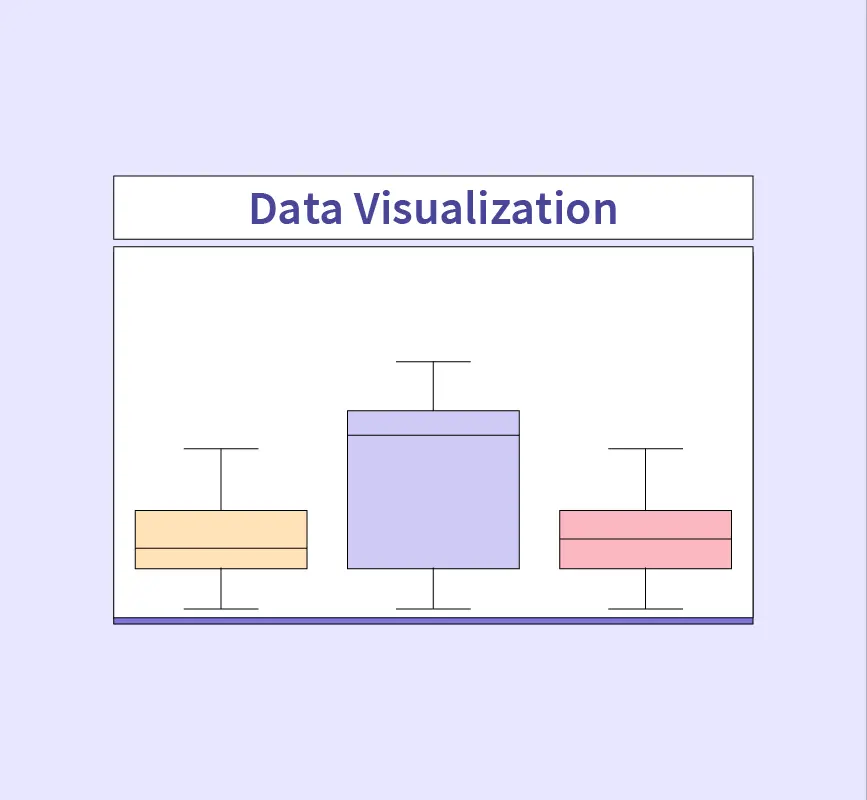
Data visualization is a powerful tool for making complex data easier to understand and interpret. It allows individuals and organizations to translate raw data into visual formats such as charts, graphs, and maps, which help in making data-driven decisions. With the increasing volume of data, effective visualization techniques are essential for presenting insights in a ...

Team Applied AI

Data Science roles

Data Science Roles – Key Job Titles, Responsibilities and Career Opportunities

The demand for data science professionals has skyrocketed as businesses increasingly rely on data-driven decision-making. From finance to healthcare, organizations leverage data to improve efficiency, optimize strategies, and gain a competitive edge. This guide explores the diverse roles within the data science ecosystem, each serving a unique function in handling, analyzing, and interpreting data. Understanding ...

prolog

An Introduction to Prolog

Prolog (Programming in Logic) is a logic programming language primarily used in artificial intelligence, natural language processing, and expert systems. Unlike imperative languages such as C or Python, which follow a step-by-step execution model, Prolog is declarative, meaning it focuses on defining rules and relationships rather than specifying explicit control flow. Prolog differs from object-oriented ...

Team Applied AI

hadoop

What is Hadoop: History, Architecture, Advantages

The rapid growth of big data has made traditional data processing methods inefficient, leading to the need for scalable solutions. Hadoop is an open-source framework that enables the distributed storage and parallel processing of massive datasets across multiple machines. Hadoop’s ability to handle large-scale data efficiently makes it essential for big data analytics, cloud computing, ...

problem characteristics in ai

Problem Characteristics in AI

Problem Characteristics in AI define the fundamental aspects that influence how artificial intelligence processes and solves problems. Understanding these characteristics is crucial for designing efficient AI models and algorithms. Different AI problems exhibit unique traits that impact decision-making, planning, and optimization. AI systems rely on structured problem characteristics to select the most appropriate techniques, such ...

movie recommendation system using machine learning

Build a Movie Recommendation System Using Machine Learning

Movie recommendation systems are AI-driven algorithms designed to predict user preferences based on their past behavior. These systems analyze viewing history, user ratings, and interactions to suggest personalized movie recommendations, enhancing user engagement and satisfaction. Popular streaming platforms like Netflix, Amazon Prime, and YouTube leverage sophisticated recommendation models to improve content discovery and retention. By ...

bfs in ai

Breadth First Search (BFS) in AI

Breadth-First Search (BFS) is a fundamental graph traversal algorithm widely used in Artificial Intelligence (AI) and computer science. It systematically explores the vertices of a graph layer by layer, ensuring that all nodes at the current depth are visited before moving to the next level. This approach makes BFS particularly effective in scenarios requiring the ...

ai vs ml vs dl

Difference between AI vs ML vs DL

Artificial Intelligence (AI), Machine Learning (ML), and Deep Learning (DL) are interconnected technologies at the forefront of modern advancements. AI represents the broader concept of machines simulating human intelligence, while ML is a subset of AI that focuses on algorithms enabling machines to learn from data. DL, a further subset of ML, uses neural networks ...

genetic algorithm machine learning

Genetic Algorithm in Machine Learning

Genetic Algorithms (GAs) are a type of search heuristic inspired by Darwin’s theory of natural selection, mimicking the process of biological evolution. These algorithms are designed to find optimal or near-optimal solutions to complex problems by iteratively improving candidate solutions based on survival of the fittest. The primary purpose of Genetic Algorithms is to tackle ...